
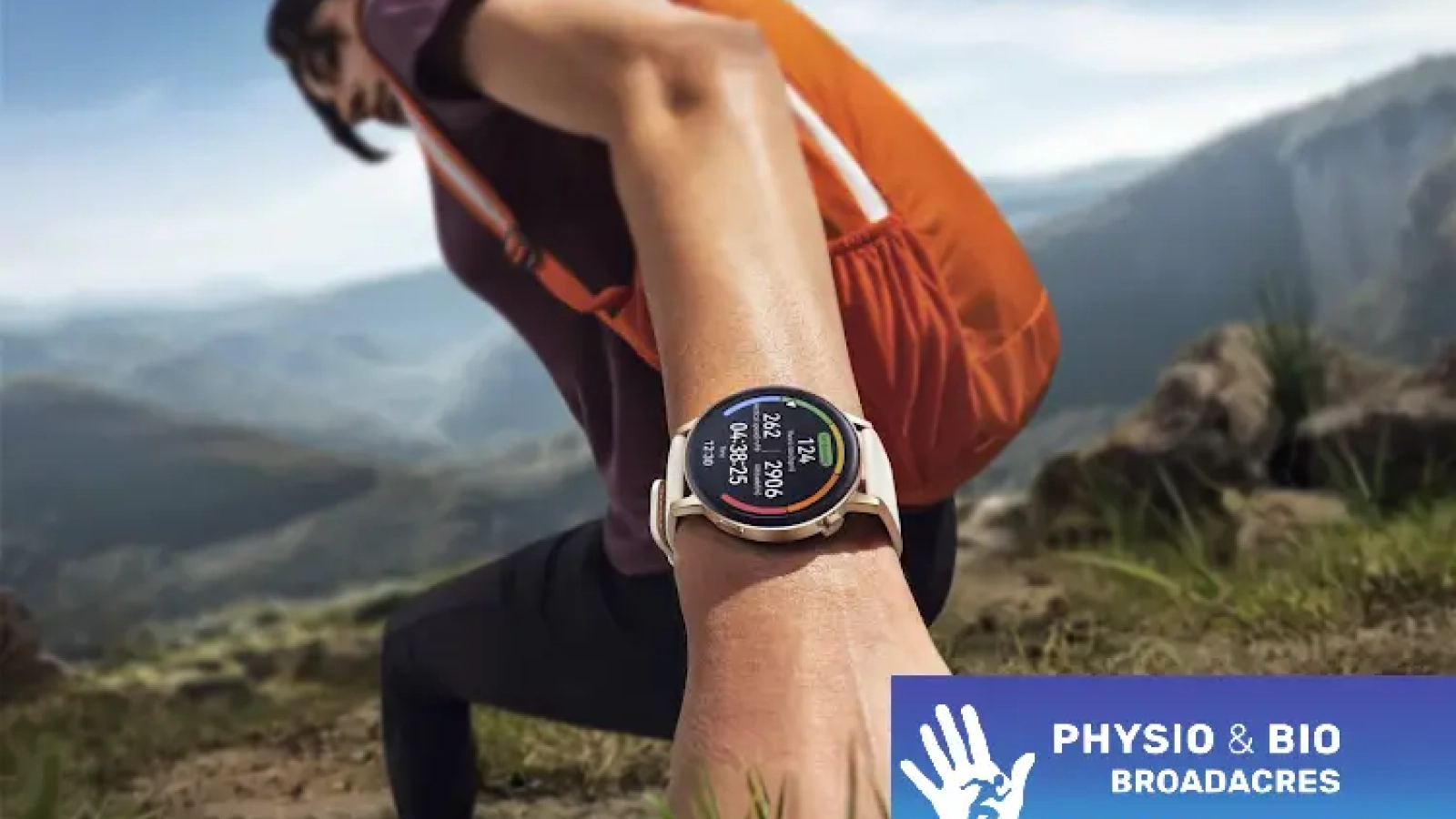
Have you ever finished a rehab session feeling great, only to push too hard during your next run or gym workout and end up right back where you started? Or maybe you've wondered why progress feels slow even though you're "doing everything right"? In the world of sports injury recovery, wearables, GPS tracking, and heart rate data are changing the game — giving both patients and physiotherapists real-world insights that clinic visits alone can never provide.
At Broadacres Physio, situated in Broadacres, Fourways, Johannesburg, we integrate data from devices like Garmin, Apple Watch, Fitbit, and apps like Strava to create smarter, safer, and faster rehabilitation plans. Whether you're recovering from an ACL reconstruction, shin splints, lower back pain, or post-surgical rehab, these tools help us make objective decisions instead of guessing. Let’s explore practical ways we use wearable tech, GPS data, heart rate monitoring, and Strava/GPX files to dramatically improve rehab outcomes for our Fourways and Johannesburg patients.
Why Wearables and GPS Data Matter in Physiotherapy Rehab
Traditional rehab often relies on subjective reports (“How does it feel?”) and in-clinic tests. While valuable, these snapshots miss what happens in real life — how much you walk daily, how hard your heart works during activity, or whether you're gradually increasing load.
Modern wearables provide:
- Objective data on daily steps, distance, pace, and intensity
- Heart rate zones to gauge cardiovascular load and recovery
- GPS tracks showing running routes, elevation changes, and speed profiles
- Trends over time — weekly mileage, training consistency, and sudden spikes
This continuous monitoring helps prevent overtraining, detect early warning signs of overload, and guide safe return-to-sport or return-to-running protocols. At Broadacres Physio, we’ve seen patients return to activity faster and with greater confidence when we combine clinical expertise with wearable insights.
Practical Ways We Use Strava, GPX, and HR Data at Broadacres Physio
Here are the real-world methods our physiotherapists use to turn data into better rehab decisions:
1. Monitoring Acute-to-Chronic Workload Ratio (ACWR) to Prevent Re-Injury
One of the strongest predictors of injury is a sudden spike in training load. Using Strava or GPX files exported from Garmin/Apple Watch, we calculate your weekly running or walking volume (distance or time) and compare it to the previous 4-week average.
- Practical tip: We aim for an ACWR between 0.8–1.3 (your current week should be 80–130% of your recent average).
- Example: A runner recovering from Achilles tendinopathy might be limited to 25 km/week initially. If Strava shows a jump to 40 km the next week, we intervene early — adjust volume, add recovery days, or modify intensity.
This simple check has helped many Fourways runners avoid setbacks.
2. Using Heart Rate Data to Guide Safe Intensity During Rehab
Heart rate zones tell us how hard your cardiovascular system is working — far more accurately than perceived effort alone, especially when pain or fatigue clouds judgment.
- Resting HR & HRV trends: Elevated resting heart rate or reduced heart rate variability often signals incomplete recovery or stress.
- Exercise HR zones: We set target zones (e.g., Zone 2 for aerobic base building) during return-to-run programs.
- Heart rate recovery: How quickly your HR drops after activity is a great indicator of fitness and autonomic recovery.
Practical application: After knee surgery, we review Garmin or Strava HR data to ensure early rehab walks stay below a safe threshold, gradually progressing intensity without overloading the joint.
3. GPS Analysis for Running Form and Load Distribution
GPS tracks reveal more than just distance — they show pace changes, elevation, cornering, and surface type.
- Pace consistency: Uneven pacing or sudden accelerations may indicate compensation or fatigue.
- Hill work monitoring: We gradually reintroduce hills for patients with patellofemoral pain or ITB syndrome.
- Route planning: We advise flatter routes early in rehab before progressing to trail or hilly runs common around Fourways.
By reviewing GPX files or Strava segments, we spot patterns that contribute to overload and tailor training accordingly.
4. Daily Step Counts and Activity Trends for Non-Runners
Not everyone is a runner. For patients recovering from back pain, shoulder surgery, or general deconditioning, we use step-count data from wearables.
- Baseline establishment: We establish a safe daily step range during early rehab.
- Gradual progression: Increase by 10–15% per week while monitoring symptoms.
- Red flags: Sudden drops in steps often indicate pain avoidance or flare-ups.
This objective feedback helps patients stay active without overdoing it.
5. Return-to-Run Protocols Powered by Wearables
Our structured return-to-run programs now incorporate wearable data:
- Week 1–2: Walk/run intervals with HR kept in Zone 1–2
- Week 3–4: Increase run time, monitor GPS pace and stride symmetry trends
- Week 5+: Introduce speed work only when weekly volume is stable and HR recovery is strong
Patients love seeing their progress visually on Strava — and we love the reduced re-injury rates.
Why Choose Broadacres Physio for Data-Driven Rehabilitation?
At Broadacres Physio in Broadacres, Fourways, Johannesburg, we don’t just treat injuries — we use every tool available to optimize recovery. Our physiotherapists are experienced in interpreting wearable data, GPS tracks, HR trends, and Strava/GPX files to create truly personalized rehab plans.
Benefits our patients experience:
- Faster, safer return to sport or daily activity
- Fewer setbacks from overloading
- Greater confidence thanks to objective progress tracking
- Tailored advice based on real-world data, not guesswork
Whether you're a runner analyzing Strava segments, a cyclist monitoring Garmin HR zones, or someone recovering from surgery wanting to track daily movement, we can help you use your data smarter.
Ready to Supercharge Your Rehab with Wearable Insights?
Don’t leave your recovery to chance. At Broadacres Physio in Fourways, Johannesburg, we combine hands-on physiotherapy with cutting-edge wearable data analysis to deliver the best possible outcomes.
Book your appointment today at www.baphysio.co.za and bring your Strava, Garmin, or other wearable data — let’s turn those numbers into real progress.
Your faster, stronger, pain-free future starts here.
Take Control of Your Pain Today
Don’t let pain or stiffness hold you back. Heat and cold therapy at Broadacres Physio in Broadacres, Fourways can help you manage discomfort, recover faster, and live an active life. Our expert physiotherapists are ready to guide you with personalized, science-backed care.
Ready to feel the difference? Visit www.baphysio.co.za to book your appointment today. Let Broadacres Physio help you thrive in Fourways, Johannesburg!
📍 Visit us at Broadacres Physio in Fourways
📞 Call us on 011 467 8300
📧 Email us at admin@baphysio.co.za
🌐 www.baphysio.co.za
Let’s get you moving, healing, and thriving — the way your body was designed to.
Broadacres Physio – Where Healing Starts With Understanding
At Broadacres Physio, we believe that healing starts by understanding you. By treating the underlying causes — not just the symptoms — we give you the tools, knowledge, and support to reclaim your health and stay pain-free for the long run.
Let’s keep you moving. Book your session today at www.baphysio.co.za.
Add a Comment