

MOVEMENT JOURNAL
ELECTROTHERAPY · FOURWAYS
A small device, two sticky pads and a reassuring product description: buying a TENS machine can look like a straightforward way to deal with pain at home. The better starting point is a conversation about what is causing your symptoms and what you want to be able to do.
TENS may provide temporary pain relief for some people, but it does not work for everyone. It is not a diagnosis, a repair kit or a replacement for an appropriate treatment plan. Before spending money, ask your physio whether it is suitable for your circumstances and how you would judge its value.
Broadacres Physio lists electrotherapy among its physiotherapy services. That does not mean every person needs a device, or that the practice sells or hires home units. Ask the team to confirm what assessment, advice or equipment options are available.
First ask: what problem are we trying to manage?
“My back hurts” is a description, not yet an explanation. Useful details include when the pain started, how it behaves, whether it is changing and which activities it affects. If the cause is unclear, get advice before choosing a machine.
Bring your real question to the appointment. Perhaps you want to sit through a meeting more comfortably, manage a difficult part of the day or understand the options alongside rehabilitation. Naming the activity makes the discussion more useful than asking whether a device is generally good for pain.
A friend’s success can be interesting without being a recommendation for you. Their symptoms, health history and treatment goals may be different. Reviews also tend to describe a product, rather than establish whether that product suits your particular problem.
A useful way to describe your goal
Consider this illustrative example: someone in Fourways finds the drive home uncomfortable after a long day at a desk. They are tempted to order a unit because a colleague recommends one. A more productive consultation starts with when the discomfort appears, how long it lasts and whether movement changes it. The decision about TENS follows that discussion.
This is an example of a decision process, not a Broadacres Physio patient story. It also is not advice to use a device while driving; TENS should not be used then.
What TENS can and cannot promise
TENS stands for transcutaneous electrical nerve stimulation. The NHS explanation of TENS describes a device delivering electrical impulses through pads on the skin to help with pain relief. Its benefit is not universal.
Treat a possible reduction in discomfort as a result to assess, rather than proof that an underlying condition has healed. A lower pain score also does not automatically tell you that a demanding activity is appropriate. Ask how any symptom relief fits with the advice you have been given about movement and rehabilitation.
You do not need to prove that you can tolerate the strongest setting. Nor does a more complicated control panel guarantee a better result. The useful question is whether you can understand and follow the recommended use reliably.
Ask these questions before you compare models
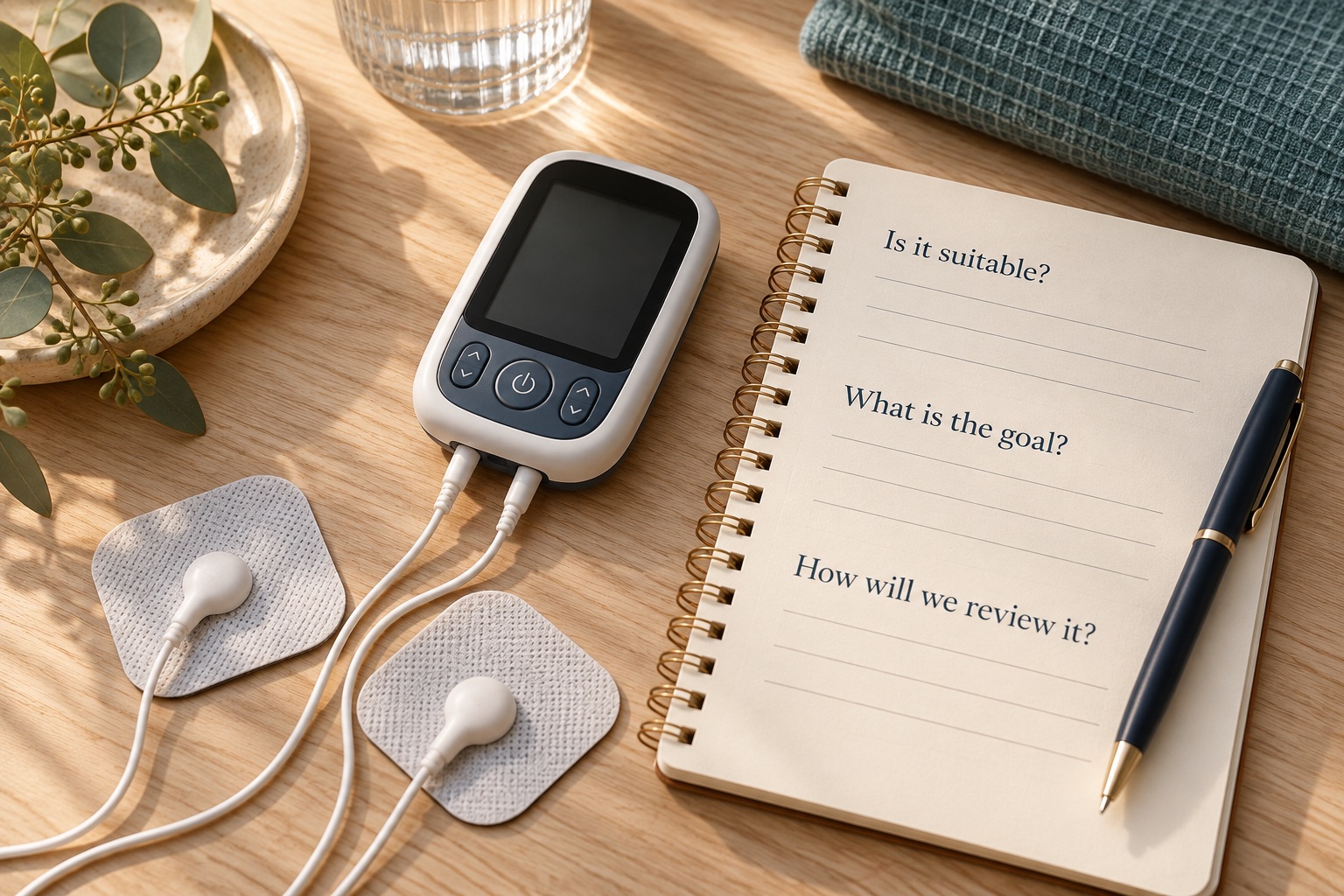
Is it suitable for my health history?
Tell the clinician about relevant conditions, pregnancy, implanted devices, changes in skin sensation and any previous reaction to adhesive pads. Do not rely on a shop description to complete a clinical safety check. Bring the product leaflet if you already own a unit.
What would count as a worthwhile benefit?
Agree a specific outcome and a way of recording it. You might note comfort during one agreed activity, how long a perceived benefit lasts and whether you can use the unit without skin problems. Your clinician can help decide which observations matter.
Avoid changing several things at once simply to make the device seem successful. If you have also altered your work routine, exercise programme or medication, say so at review. A brief honest record is more useful than an elaborate spreadsheet with uncertain conclusions.
What else remains part of the plan?
Ask what you should continue doing and what needs reassessment. A device can become a distraction if it takes the place of the exercises, activity changes or follow-up discussion that were actually recommended.
If you do not know what your current plan is, ask for it in plain language. You should be able to explain the purpose of each part without needing to remember technical terms.
Make the safety conversation specific
The NHS advises against TENS use with a pacemaker or epilepsy, and during pregnancy unless a doctor or midwife advises it. Pads should not be placed on broken, infected, irritated or numb skin, the neck, mouth or eyes, or across the chest and back together. Do not use it while sleeping, bathing, driving or operating tools or machinery. Stop if pads irritate your skin; the sensation should not be painful.
This is a short safety summary, not a complete instruction manual. Read the manufacturer’s leaflet and get individual guidance on suitability, pad placement, controls and use. If an instruction is unclear, do not improvise from an online photograph.
Ask for a demonstration you can repeat
Knowing where the power button is does not mean you understand the device. Ask to practise the relevant steps under guidance and explain them back in your own words. Check how you will know if a pad needs replacing, what a skin reaction could look like and who to contact if you are uncertain.
Your home circumstances matter too. Can you reach the agreed area easily? Can you see the controls? Do you understand the instructions? These practical details can influence whether an otherwise reasonable option is manageable for you.
Compare the whole purchase, not just the price
Once suitability is established, look at the ongoing practicalities. Ask the supplier about replacement pads, availability of compatible leads, battery or charging requirements, readable instructions, warranty and support. A low initial price may be less convenient if everyday parts are difficult to obtain.
Check what is included in the box. Photograph or write down the model name so your clinician knows which device you are discussing. Avoid treating claims such as “professional strength” or the number of programmes as a substitute for clear specifications and appropriate advice.
This article does not recommend a brand or verify a supplier’s product claims. Broadacres Physio’s public service information also does not establish a home-device package, price or rental arrangement. Confirm those details directly if they matter to your decision.
Plan the review before the novelty wears off
Ask when to review the trial and what should prompt earlier contact. A review is not simply a question of whether the unit switched on. Discuss whether the agreed outcome improved, whether there were unwanted effects and whether the original symptoms have changed.
If it provides no useful benefit, say so. Continuing because you have already paid for it can turn a modest purchase into an ongoing obligation. The next step may be to revisit the broader assessment or management plan rather than buy a more expensive version.
If symptoms are new, worsening or different from the problem assessed, seek clinical advice instead of simply increasing use. Bring the unit and your short notes to the appointment if asked.
Frequently asked questions
Should I buy a TENS machine before my first appointment?
It is sensible to discuss the problem and suitability first. You can bring a product page or leaflet to the appointment without committing to a purchase. Our guide to your first physiotherapy visit explains what to expect from an assessment.
Is a more expensive unit automatically better for me?
Price does not answer the clinical suitability question. Once that is settled, compare clarity of controls, instructions, replacement parts and support against your needs.
Can I use a friend’s settings and pad positions?
Do not assume their instructions apply to you. Get guidance for your own situation and device, and follow the manufacturer’s safety information.
Does Broadacres Physio sell home TENS units?
The website confirms electrotherapy as a service, but does not establish a sales or rental offering. Contact the practice to confirm the current scope and discuss whether a home unit is appropriate.
YOUR NEXT STEP
Book an assessment in Fourways
Bring your questions about TENS, your symptoms and any product information. Ask the team to confirm the available appointment scope.
011 467 8300 · admin@baphysio.co.za
Broadacres Shopping Centre, corner Cedar & Valley Road, Fourways.
General educational information. Individual assessment and advice may differ.
Add a Comment