THE MOVEMENT JOURNAL
POSTURAL & ERGONOMIC TRAINING · FOURWAYS

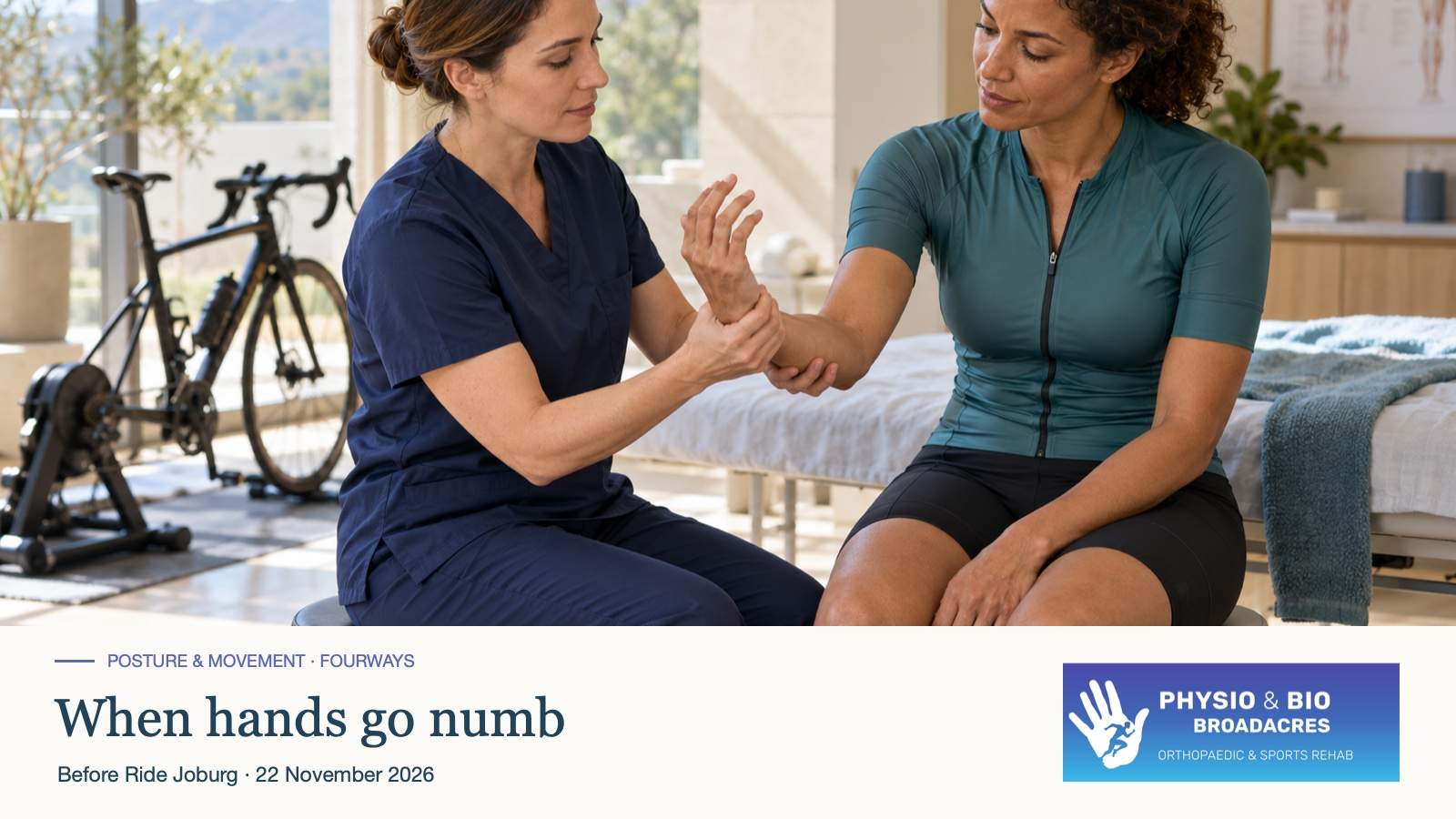
Numb hands on the bike deserve more attention than another pair of padded gloves. Pressure, riding position and equipment can be part of the explanation, but tingling or loss of feeling is not a diagnosis. If it keeps happening, persists off the bike or comes with weakness, seek assessment before treating it as an ordinary cost of a long ride.
With Ride Joburg approaching, it is tempting to postpone the conversation until after the finish. A more useful plan is to describe the symptoms now, understand whether riding is appropriate and separate clinical advice from any equipment adjustments.
The official Ride Joburg road-race page confirms Sunday, 22 November 2026. This article addresses existing entrants and recreational cyclists around Fourways; it does not imply that Broadacres Physio provides event medical care or a dedicated bike-fitting service.
Describe the feeling before naming the problem
Cyclists often use “handlebar palsy” as shorthand for any uncomfortable hand. That label can hide useful differences. Which hand is affected? Which fingers? Is the feeling tingling, reduced sensation, pain or difficulty gripping? Does it disappear when you stop, or remain while doing ordinary tasks?
Write down what you have noticed without deliberately provoking another episode. A simple account can be more helpful than arriving with a diagnosis copied from a forum. Include symptoms at night, at a desk or while driving, even if the bicycle first drew your attention to them.
The NHS explanation of carpal tunnel syndrome describes one nerve-pressure problem that can cause numbness, tingling and grip difficulty. It is only one possible explanation. Similar descriptions from two riders do not establish that they have the same condition or need the same treatment.
What the bicycle can contribute
Your hands support contact with the bars while also steering, braking and changing gear. The relationship between your body, reach and hand position is therefore worth discussing when symptoms occur during cycling.
The American Orthopaedic Society for Sports Medicine’s cycling guidance discusses hand position, wrist position and pressure in relation to wrist and forearm symptoms. It also identifies loss of sensation and increased weakness with injury as reasons for medical assessment. Equipment considerations belong alongside that clinical conversation, rather than replacing it.
Be specific about recent changes: a different bicycle, new bars, a moved saddle, a longer route or a return after time away. Tell the clinician if nothing changed too. Symptoms can still need assessment when you cannot point to a new purchase or adjustment.
A photograph can show context
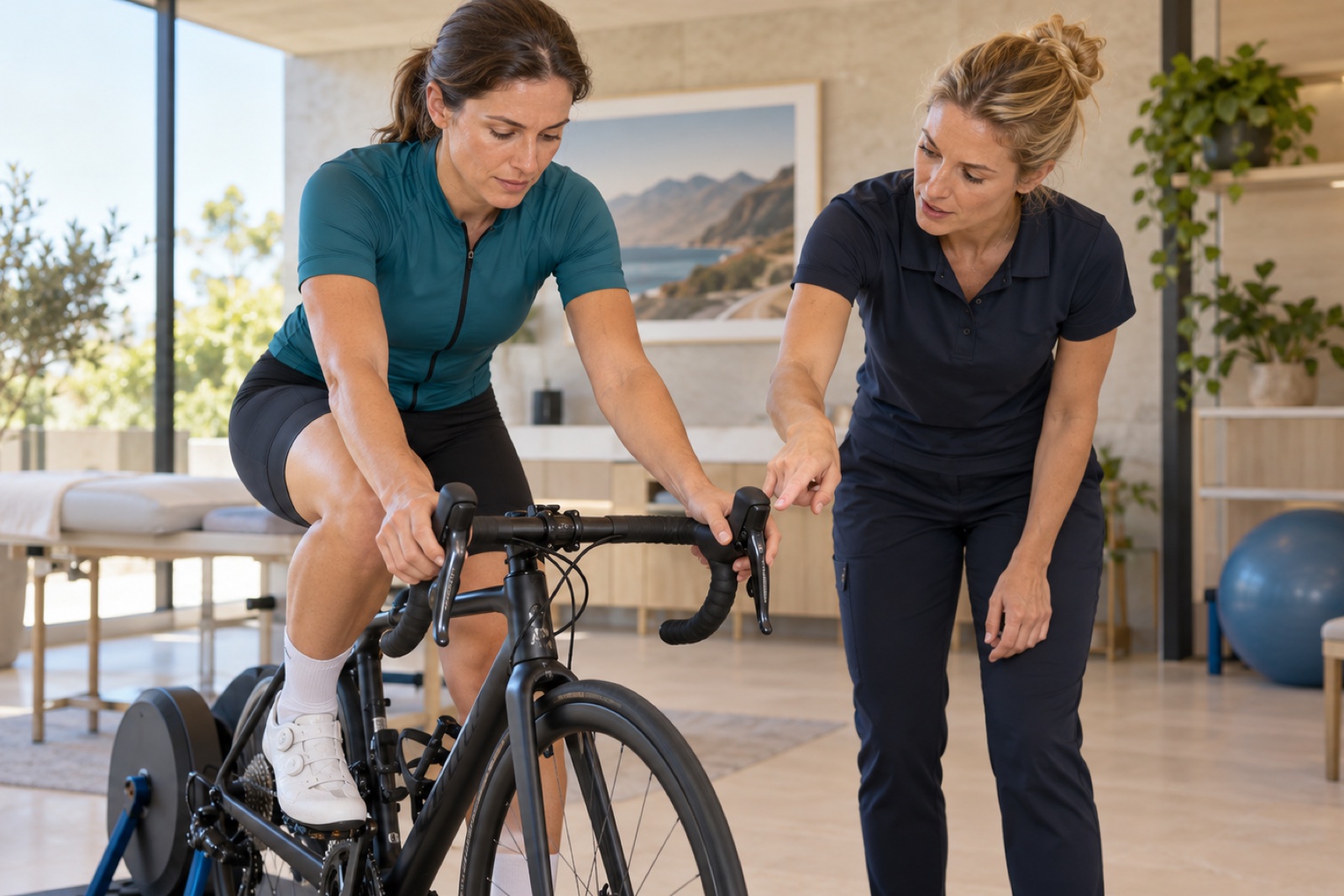
If requested, a photo of your usual position on a securely supported stationary bicycle may help explain your setup. Ask what views would be useful and how to share them. A photograph is background information, not an online diagnosis or a complete bike fit.
Do not ask someone to film you closely in traffic or ride one-handed to demonstrate a symptom. Arrange a safe, stationary way to discuss the position instead.
Decide about control before deciding about comfort
Hands are part of safe bicycle control. If symptoms affect your ability to brake, steer or hold the bars securely, stop in a safe place and seek advice. A planned distance or a reassuring training average is not a reason to continue with unreliable control.
Do not try to regain feeling by shaking a hand loose while negotiating traffic or riding close to others. You need a safe place to stop, not another distraction while moving. Plan how to arrange assistance if you cannot continue safely.
This is especially relevant before a large road event. Your participation decision should consider your symptoms and the demands of the ride, with individual medical advice where needed. Reading a list of adjustments cannot clear you to take part.
Make the appointment useful
Bring a concise history rather than a shopping list. Broadacres Physio offers musculoskeletal physiotherapy and postural guidance. The assessment can help determine what needs attention and whether another healthcare professional should be involved. Confirm the exact appointment scope with the practice.
- Note where the altered sensation occurs and whether one or both hands are affected.
- Describe when it starts during a usual ride and how long it remains afterwards.
- Report weakness, dropped objects or trouble with buttons and other everyday tasks.
- Include neck or arm symptoms and any fall or other injury.
- List recent equipment changes and any advice or treatments already tried.
There is no need to repeat a long ride to make the story more convincing. If you are unsure how a symptom behaved, say so. Clinical decisions should not depend on you manufacturing a clearer demonstration.
An example of the right question
An illustrative rider says, “My right hand feels less sensitive after longer rides, and it is taking longer to settle. I have tried different gloves. What should be assessed before I ride again?” That gives the clinician more useful information than asking which brand of glove fixes numbness.
This is an example of how to describe a concern, not a Broadacres Physio case or evidence that gloves help or fail for a particular diagnosis.
Treat adjustments as changes to review
If changes to the setup are appropriate, ask who should make them, what the intended result is and how to review the response. A qualified bicycle specialist may be relevant alongside clinical advice. Do not assume a physiotherapy appointment includes mechanical alterations or a comprehensive bike fit.
Avoid changing several contact points immediately before an event without understanding the consequences. Keep a record of what was altered, rather than relying on memory after a difficult ride. Mechanical adjustments should follow appropriate manufacturer and professional guidance.
There is also a difference between a recommended change and an improvised exercise. Do not start forceful stretches or nerve exercises from a video to push through worsening numbness. Ask which activities, if any, are suitable for your assessed problem.
Know when routine follow-up is not enough
Seek prompt medical assessment if numbness is persisting, worsening or accompanied by weakness. The NHS advises medical review for carpal tunnel-type symptoms that worsen or do not settle; do not assume you have that condition before being assessed.
After an accident, severe pain, deformity or loss of feeling needs urgent care. If sudden arm pain occurs with chest pressure or heaviness, seek emergency help immediately. The NHS arm-pain guidance distinguishes these warning signs from routine musculoskeletal complaints. In South Africa, use local emergency services rather than the UK contact routes on international source pages.
Frequently asked questions
Will padded gloves solve the problem?
They may form part of an equipment discussion, but a purchase does not establish the cause of numbness or address every possible problem. Persistent or recurrent symptoms deserve assessment.
Does numbness in certain fingers identify the exact nerve?
The pattern is useful information for a clinician. It is not enough for a reliable self-diagnosis, especially if weakness, neck symptoms or symptoms away from cycling are present.
Can I still ride Joburg if it only happens on long rides?
That needs an individual decision. Explain the symptom pattern and the event demands to your clinician. Do not treat a distance threshold as proof that you can safely continue up to that point.
Does Broadacres Physio offer a bike-fit package?
The public website lists physiotherapy and postural training but does not establish a specific bike-fitting package. Ask the practice what assessment and advice are available before booking.
YOUR NEXT STEP
Discuss your next step in Fourways
Describe the hand symptoms, whether they persist off the bike and any weakness when contacting the practice. Confirm the appropriate assessment scope and whether other medical advice is needed.
011 467 8300 · admin@baphysio.co.za
Broadacres Shopping Centre, corner Cedar & Valley Road, Fourways.
General educational information. Individual assessment and advice may differ. Featured and supporting visuals are generated editorial illustrations with the original practice logo added separately.
Add a Comment