
That mix of excitement and dread when booking a long-haul flight from OR Tambo — whether it’s a business trip to Europe, a family holiday to Cape Town, or an overseas adventure. Johannesburg travellers know the reality all too well: hours crammed in a seat, dry cabin air, and the stiff, achy feeling that hits when you finally stand up at your destination.
At Broadacres Physio in Fourways, we regularly see patients whose holidays or work trips are spoiled by travel-related back pain, tight hips, swollen ankles, or neck tension. The good news is that with some smart preparation before, during, and after the flight, you can arrive feeling far better.
Simple stretching, circulation exercises, and low-impact movements can make a big difference. Our team — Nicola Walker, Jessica Krone, and Gemma Schultz — helps many local patients get travel-ready so they can enjoy the journey and hit the ground running.
Why Long Flights Take a Toll on Your Body
Sitting for 4+ hours in a cramped position compresses your spine, shortens hip flexors, and reduces blood flow in your legs. Cabin pressure and low humidity add to dehydration and muscle stiffness. Common issues include:
- Lower back and neck pain from poor posture
- Tight hips and hamstrings
- Swollen feet and ankles
- Increased risk of deep vein thrombosis (DVT) — blood clots in the legs
- Headaches and general fatigue
Frequent flyers from Gauteng, especially those with desk jobs or previous injuries, are more prone to these problems. Preparing your body helps break the cycle of stiffness and discomfort.
Pre-Flight Preparation (1–2 Weeks Before Travel)
Start building resilience before you even pack your bags.
Strengthen and mobilise key areas:
- Focus on your core, glutes, and upper back to support better sitting posture.
- Gentle hip flexor and hamstring stretches daily.
- Low-impact exercises like walking, swimming, or cycling to improve circulation.
Practise good posture habits:
- Set a timer at work to stand and move every 30–45 minutes — the same discipline helps on the plane.
Choose supportive gear:
- Compression socks (15–30 mmHg) to help circulation
- A small lumbar pillow or rolled towel for lower back support
- Comfortable, loose clothing and supportive shoes
Stay ahead on hydration and nutrition:
- Increase water intake in the days leading up. Avoid excess caffeine and alcohol, which dehydrate you further.
In-Flight Strategies: Keep Moving and Circulating
The key is regular movement — even small actions every 30–60 minutes make a difference.
Seated Circulation Exercises (Do these hourly)
- Ankle Circles — Lift one foot slightly and draw big circles with your toes (10 clockwise, 10 anti-clockwise). Repeat on the other side. This pumps blood through your lower legs.
- Foot Pumps — Alternate between pointing your toes down (like pressing a gas pedal) and pulling them up toward your shin. Do 15–20 repetitions.
- Seated Marching — Lift one knee toward your chest (as much as space allows), then the other. This activates hips and improves blood flow.
- Glute Squeezes — Tighten your buttock muscles for 5–10 seconds, relax, and repeat 10 times. Great for preventing that “dead bum” feeling.
Gentle Stretches You Can Do in Your Seat
- Neck Rolls and Tilts — Slowly tilt your head ear-to-shoulder, then gently rotate side to side. Avoid forcing it if you have existing neck issues.
- Shoulder Rolls — Roll shoulders forward and backward 10 times to release upper back tension.
- Seated Hamstring Stretch — Extend one leg as straight as possible under the seat in front, flex your foot, and lean forward slightly from the hips. Hold 20–30 seconds per side.
- Knee-to-Chest — Hug one knee gently toward your chest (when seatbelt sign is off) to open hips and stretch the lower back.
When Possible: Stand and Walk
Every 1–2 hours, walk the aisle for a few minutes. This is one of the best ways to boost circulation and prevent stiffness. Use it as a chance to do a few standing calf raises or gentle side bends.
Low-Impact Exercises to Do Before and After the Flight
In the airport lounge or once you reach your hotel, try these:
- Cat-Cow Pose (on all fours if space allows, or standing) — Mobilises the spine.
- Standing Hip Flexor Stretch — Step one foot back and gently lunge forward.
- Wall Angels — Stand against a wall and slide arms up and down to open chest and shoulders.
- Calf Raises — Rise onto toes and lower slowly (great for circulation).
These movements counteract the compressive effects of sitting and help restore normal joint mobility.
Additional Practical Tips for Johannesburg Travellers
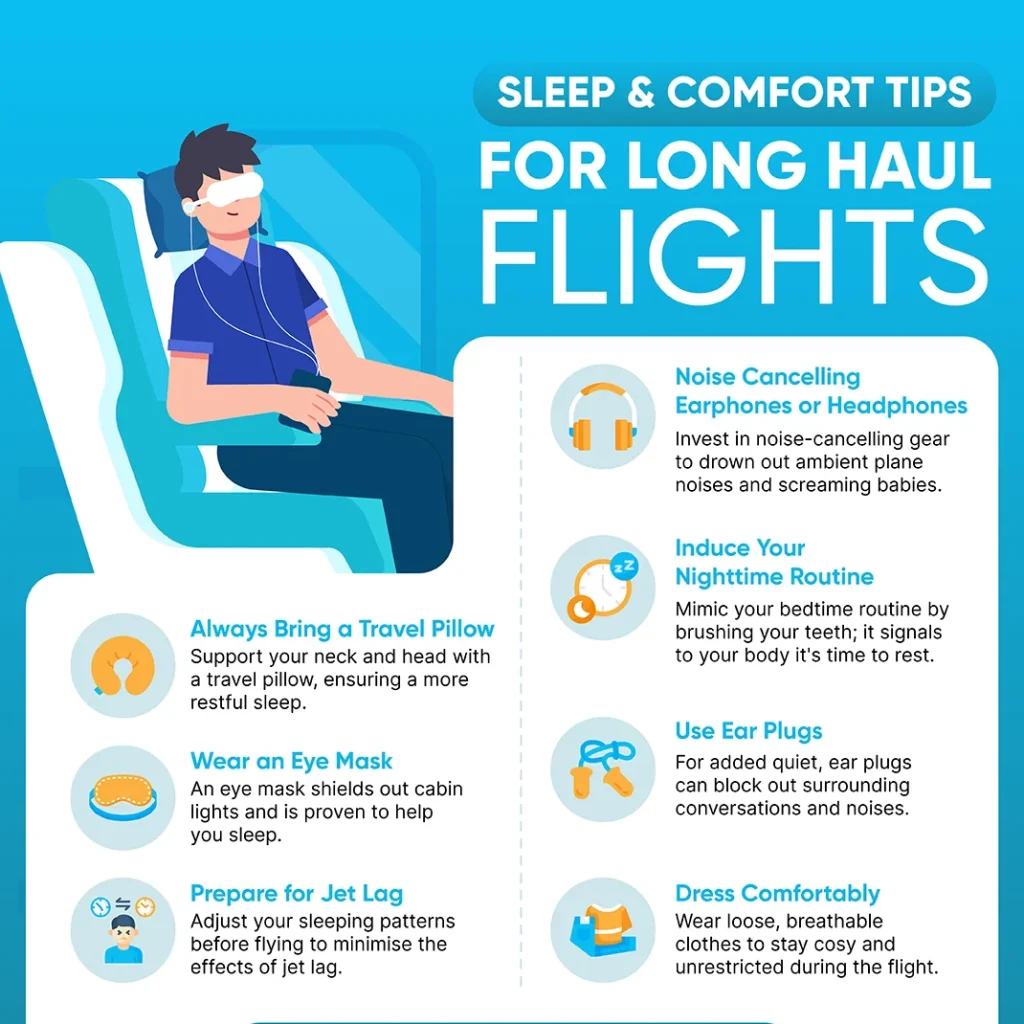
- Hydrate constantly — Bring an empty water bottle through security and refill it. Aim for water rather than tea, coffee, or alcohol.
- Avoid crossing legs — This restricts blood flow.
- Wear compression socks — Especially useful on flights longer than 4 hours or if you have a history of swelling.
- Use a neck pillow wisely — Support the natural curve of your neck rather than letting your head flop forward.
- Consider timing — If possible, choose flights that align better with your body clock to reduce fatigue.
For business travellers doing multiple long flights per year or families heading out on holiday, these habits become even more important.
When to See a Physiotherapist Before Travelling
Book a session with a physiotherapist in Fourways or Broadacres physio if you:
- Have existing back, neck, or hip pain
- Are recovering from injury or surgery
- Have a history of DVT or circulation issues
- Experience significant stiffness after shorter trips
- Want a personalised pre-flight mobility and strengthening programme
Early preparation can prevent minor issues from turning into major problems mid-trip.
Long Flights and the Johannesburg Lifestyle
Whether you’re rushing through OR Tambo for an international meeting or flying down to Durban for a family wedding, Gauteng’s active yet demanding lifestyle doesn’t pause for travel. Many locals juggle office work, long commutes on the N1, weekend sport, and family life — all while squeezing in travel.
That combination makes the body more vulnerable to the effects of prolonged sitting. A targeted physiotherapy approach helps you maintain the mobility and strength needed for both daily life in Johannesburg and smoother travel experiences.
Conclusion
Long flights don’t have to mean arriving stiff, swollen, or in pain. By preparing with targeted stretching, circulation exercises, low-impact movements, and smart habits, you can protect your body and enjoy the journey far more.
At Broadacres Physio in Fourways, Nicola Walker, Jessica Krone, and Gemma Schultz regularly help Johannesburg residents get travel-ready — whether for business, holidays, or visiting family. We create personalised plans that fit real schedules and address individual needs.
Ready to fly more comfortably?
Contact Broadacres Physio today to book a pre-travel assessment. We’ll assess your posture, mobility, and any problem areas, then give you a tailored programme of exercises and tips for your next flight.
Visit https://www.baphysio.co.za or WhatsApp our team in Broadacres to schedule your appointment.
Safe travels — and here’s to arriving refreshed instead of wrecked!
Internal linking suggestions:
- Link to “Chronic Back Pain After Long Car Commutes on the N1”
- Link to “Neck Pain from Desk Work: Simple Fixes for Fourways Office Workers”
- Link to “Why Your Hamstrings Keep Tightening — And What a Physio Actually Does About It”
- Link to “Desk Stretches You Can Do in 5 Minutes at Work”
FAQ
Q1: How often should I move during a long flight? Aim to do gentle seated exercises every 30–60 minutes and walk the aisle every 1–2 hours when the seatbelt sign allows.
Q2: Are compression socks really necessary? They’re highly recommended for flights over 4 hours, especially if you have risk factors for swelling or DVT. They improve circulation without much effort.
Q3: Can physiotherapy really help with travel-related stiffness? Yes. A pre-flight session can identify weaknesses, teach specific mobility exercises, and reduce your risk of pain or injury during and after travel.
Q4: What’s the best way to support my lower back on a plane? Use a small lumbar pillow or rolled-up jacket/towel behind your lower back to maintain the natural curve of your spine.
Q5: Do I need a referral to see a physiotherapist at Broadacres Physio? No referral is needed. You can book directly with our friendly team in Fourways.
Take Control of Your Pain Today
Don’t let pain or stiffness hold you back. Heat and cold therapy at Broadacres Physio in Broadacres, Fourways can help you manage discomfort, recover faster, and live an active life. Our expert physiotherapists are ready to guide you with personalized, science-backed care.
Ready to feel the difference? Visit www.baphysio.co.za to book your appointment today. Let Broadacres Physio help you thrive in Fourways, Johannesburg!
📍 Visit us at Broadacres Physio in Fourways
📞 Call us on 011 467 8300
📧 Email us at admin@baphysio.co.za
🌐 www.baphysio.co.za
Let’s get you moving, healing, and thriving — the way your body was designed to.
Broadacres Physio – Where Healing Starts With Understanding
At Broadacres Physio, we believe that healing starts by understanding you. By treating the underlying causes — not just the symptoms — we give you the tools, knowledge, and support to reclaim your health and stay pain-free for the long run.
Let’s keep you moving. Book your session today at www.baphysio.co.za.
Add a Comment