
Bringing a new baby into the world is one of the most incredible experiences — but it also puts enormous demand on your body. Many new mothers in Fourways and Johannesburg are surprised by how weak their core feels weeks or even months after giving birth. Simple tasks like picking up the baby, getting out of bed, or carrying the car seat can feel exhausting and sometimes painful.
At Broadacres Physio in Fourways, we support many new mums who feel disconnected from their bodies after birth. The good news is that with the right guidance, you can safely rebuild your core strength, improve posture, reduce back pain, and feel strong and confident again.
Postnatal core recovery is not about “getting your pre-baby body back” quickly — it’s about healing properly and rebuilding a strong, functional foundation.
What Happens to Your Core During Pregnancy and Birth?
During pregnancy, your abdominal muscles stretch significantly to make space for your growing baby. The two sides of your rectus abdominis (the “six-pack” muscles) often separate — a condition called Diastasis Recti. At the same time, your pelvic floor muscles stretch and weaken.
After birth (whether vaginal or C-section), these muscles don’t automatically snap back. Without proper rehabilitation, many women are left with:
- A weak, bulging belly
- Lower back pain
- Pelvic floor issues (leaking when coughing, sneezing, or exercising)
- Poor posture
- A feeling of instability in the core
Why Postnatal Core Recovery Matters
A strong core after birth isn’t just about appearance. It helps with:
- Better posture while breastfeeding or carrying your baby
- Reducing back and pelvic pain
- Improving bladder control
- Safe return to exercise and daily activities
- Long-term prevention of prolapse and other issues
Rushing back into intense exercise too soon (such as sit-ups, planks, or running) can actually make separation worse and delay healing.
How Physiotherapy Helps with Postnatal Core Recovery
At Broadacres Physio, our women’s health physiotherapists — Nicola Walker, Jessica Krone, and Gemma Schultz — specialise in safe, progressive postnatal recovery.
We start with a gentle assessment (usually from 6 weeks postnatal) that includes:
- Checking for diastasis recti
- Assessing pelvic floor strength and function
- Evaluating posture and breathing patterns
- Creating a personalised recovery programme
Treatment focuses on:
- Gentle reactivation of deep core muscles (transverse abdominis)
- Pelvic floor exercises (Kegels and beyond)
- Progressive strengthening exercises
- Breathing techniques for better core connection
- Posture correction for new mums
Practical Tips for Regaining Core Strength at Home
Here are safe exercises you can start in the early weeks (always get clearance from your doctor or physio first):
1. Gentle Breathing & Core Connection
- Lie on your back with knees bent.
- Breathe deeply into your belly, then gently draw your lower belly toward your spine as you exhale.
- Hold for 3–5 seconds, repeat 10 times.
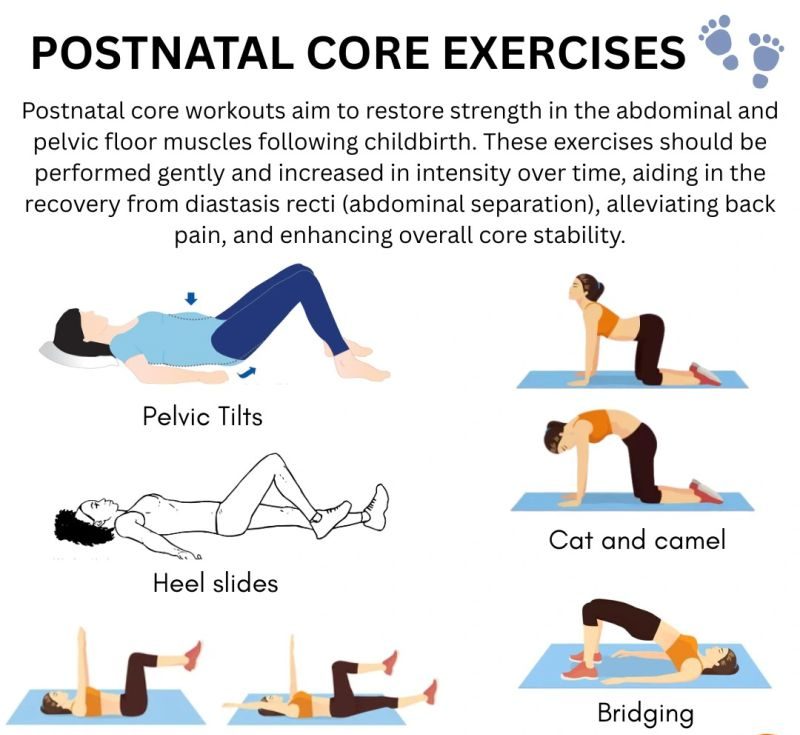
2. Heel Slides
- Slide one heel along the floor while keeping your core gently engaged.
- Alternate sides. Great for reconnecting with deep core muscles.
3. Pelvic Tilts
- Gently rock your pelvis to flatten your lower back into the floor.
- Progress to bridges once you have good control.
4. Posture Resets
- Every time you feed your baby, roll your shoulders back and gently engage your core.
- Avoid slouching during breastfeeding or bottle feeding.
5. Safe Daily Habits
- Log roll when getting out of bed (roll onto your side first)
- Bend at your knees, not your waist, when lifting the baby
- Use a pillow for support when sitting
When to See a Postnatal Physiotherapist
We recommend every new mother has a postnatal check with a physiotherapist. Book sooner if you experience:
- Persistent lower back or pelvic pain
- A visible gap or bulging in your stomach
- Leaking urine when coughing, sneezing, or laughing
- Feeling of heaviness or pressure in the pelvic area
- Difficulty engaging your core muscles
- Pain during daily activities
Early intervention leads to faster and better recovery.
Postnatal Recovery and the Johannesburg Mum’s Reality
Life as a new mum in Fourways is busy — school runs for older children, traffic on William Nicol, shopping at Broadacres, and trying to find time for yourself. Many mums feel pressure to “bounce back” quickly while managing sleepless nights and new responsibilities.
At Broadacres Physio, we create realistic programmes that fit around real Joburg motherhood — short, effective sessions that deliver results without adding extra stress.
Conclusion
Regaining core strength after birth is one of the most important investments you can make in your long-term health and wellbeing. It’s not about perfection — it’s about feeling strong, stable, and confident in your body again as you care for your new baby.
Nicola Walker, Jessica Krone, and Gemma Schultz at Broadacres Physio are passionate about supporting new mothers through this important phase. Our gentle, evidence-based approach helps you heal properly and return to the activities you love.
Ready to rebuild your core strength safely?
Book your postnatal assessment with our women’s health team today. We’ll give you a clear picture of your recovery stage and create a personalised plan tailored to your needs and lifestyle.
Visit https://www.baphysio.co.za or contact our Broadacres practice in Fourways to schedule your appointment.
You’ve done the hardest part — now let us help you feel strong again.
Internal linking suggestions:
- Link to “Pregnancy Pelvic Pain Relief: Safe Physiotherapy in Fourways”
- Link to “Women’s Health Physio: Addressing Incontinence After Childbirth”
- Link to “Understanding Lower Back Pain: Common Causes and How Physio Can Help in Johannesburg”
FAQ
Q1: When can I start postnatal core exercises? Gentle breathing and connection exercises can start soon after birth, but a full strengthening programme is best after your 6-week check-up with a physiotherapist.
Q2: How long does it take to recover core strength after birth? Most women see good improvement within 8–12 weeks of consistent physiotherapy, but full recovery can take 6–12 months or longer depending on individual circumstances.
Q3: Can physiotherapy help with diastasis recti? Yes. Specific exercises and techniques can help close the gap and restore strong functional core strength.
Q4: Is it normal to still look pregnant months after birth? Yes, this is very common due to diastasis recti and stretched abdominal tissues. Proper rehabilitation helps restore tone and function.
Q5: Do I need a doctor’s referral for postnatal physio? No referral is needed. You can book directly with our team at Broadacres Physio.
Take Control of Your Pain Today
Don’t let pain or stiffness hold you back. Heat and cold therapy at Broadacres Physio in Broadacres, Fourways can help you manage discomfort, recover faster, and live an active life. Our expert physiotherapists are ready to guide you with personalized, science-backed care.
Ready to feel the difference? Visit www.baphysio.co.za to book your appointment today. Let Broadacres Physio help you thrive in Fourways, Johannesburg!
📍 Visit us at Broadacres Physio in Fourways
📞 Call us on 011 467 8300
📧 Email us at admin@baphysio.co.za
🌐 www.baphysio.co.za
Let’s get you moving, healing, and thriving — the way your body was designed to.
Broadacres Physio – Where Healing Starts With Understanding
At Broadacres Physio, we believe that healing starts by understanding you. By treating the underlying causes — not just the symptoms — we give you the tools, knowledge, and support to reclaim your health and stay pain-free for the long run.
Let’s keep you moving. Book your session today at www.baphysio.co.za.
Add a Comment