

That sharp pinching pain when you reach up to grab something from a high shelf, wash your hair, or serve a tennis ball — many people in Johannesburg know this feeling all too well. Shoulder impingement is one of the most common shoulder problems we treat at Broadacres Physio in Fourways.
It can start gradually or appear suddenly after a weekend of painting, gym sessions, or even long hours working at a desk. The frustrating part? The pain often gets worse over time if left untreated, limiting simple daily activities and favourite sports.
The good news is that with the right physiotherapy approach, most people recover well from shoulder impingement without needing injections or surgery.
What Is Shoulder Impingement?
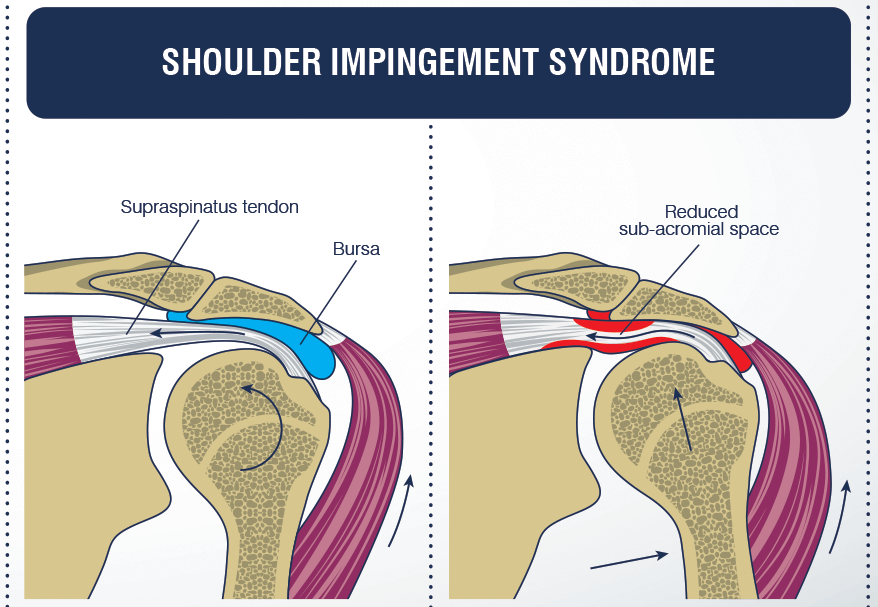
Shoulder impingement occurs when the tendons or bursa (a fluid-filled sac) in your shoulder get compressed or pinched between the bones as you lift your arm. The space where these structures pass through becomes narrowed, causing pain, inflammation, and weakness.
There are two main types:
- Subacromial impingement (most common)
- Internal impingement (more common in overhead athletes like swimmers and cricketers)
Why Shoulder Impingement Happens
Several factors commonly lead to shoulder impingement in our area:
1. Poor Posture and Desk Work
Many Fourways and Sandton professionals spend hours hunched over computers. This forward shoulder position reduces the space in the shoulder joint and weakens important stabilising muscles.
2. Muscle Imbalances
Strong chest and front shoulder muscles combined with weak rotator cuff and upper back muscles create poor shoulder mechanics. This is very common among gym-goers who focus heavily on pushing exercises (bench press, shoulder press) but neglect pulling movements.
3. Repetitive Overhead Activities
Painting houses, hanging curtains, throwing balls with kids, swimming, or playing golf can all contribute, especially if done without proper warm-up or recovery.
4. Previous Injuries or Compensation
Old neck issues, previous shoulder strains, or even lower back problems can cause you to move your shoulder differently, leading to impingement over time.
5. Age and Wear
As we get older, natural changes in the shoulder can reduce the space available, making impingement more likely.
How Physiotherapy Fixes Shoulder Impingement
At Broadacres Physio, we don’t just treat the pain — we correct the underlying causes. Our approach typically includes:
Phase 1: Pain Relief and Reducing Inflammation
- Gentle manual therapy to improve joint movement
- Soft tissue release for tight muscles
- Taping techniques to support the shoulder
- Advice on modifying daily activities
Phase 2: Restore Mobility
- Specific stretches for tight shoulder capsule and muscles
- Mobility drills to regain full range of movement
Phase 3: Strengthen the Rotator Cuff and Scapular Stabilisers
This is the most important phase. We focus on:
- Rotator cuff strengthening exercises
- Scapular (shoulder blade) control exercises
- Progressive resistance training
Phase 4: Functional Return
Sport-specific or work-specific exercises to help you return safely to the activities you love.
Practical Tips You Can Start Today
Here are safe exercises you can try at home (stop if they increase sharp pain):
- Pendulum Swings Lean forward and gently swing your arm in small circles. Do 10 circles each direction.
- Wall Slides Stand facing a wall and slowly slide your hands up the wall, keeping elbows close to your body.
- External Rotation with Band Hold a resistance band with elbows at your sides and rotate your forearms outward.
- Scapular Setting Gently squeeze your shoulder blades together and hold for 5 seconds. Repeat 10 times.
- Posture Reset Every 30 minutes at your desk: roll shoulders back, gently tuck your chin, and hold for 10 seconds.
Important: These are general suggestions. A proper assessment ensures you’re doing the right exercises for your specific type of impingement.
When to See a Physiotherapist
Book an appointment with a physiotherapist in Fourways or Broadacres physio if you have:
- Pain when lifting your arm above shoulder height
- Night pain that disturbs your sleep
- Weakness when lifting objects
- Pain that has lasted more than 2–3 weeks
- Clicking or catching sensations in the shoulder
- Difficulty with daily activities like dressing or driving
The sooner you address shoulder impingement, the faster and more complete your recovery will be.
Shoulder Impingement and the Johannesburg Lifestyle
From long hours at desks in Fourways offices to weekend golf games, gym sessions, and playing with children at local parks, our active yet demanding lifestyle puts shoulders under constant stress. Add in the hours spent driving in Johannesburg traffic and it’s easy to see why so many locals develop shoulder problems.
At Broadacres Physio, we understand these realities and design treatment plans that fit around real Joburg lives — whether you’re a busy professional, parent, or active retiree.
Conclusion
Shoulder impingement can be painful and limiting, but it usually responds very well to the right physiotherapy treatment. By addressing muscle imbalances, improving posture, and restoring proper shoulder mechanics, most people can return to pain-free movement and their favourite activities.
Nicola Walker, Jessica Krone, and Gemma Schultz at Broadacres Physio have helped hundreds of Johannesburg patients overcome shoulder impingement and regain full function.
Ready to get rid of that nagging shoulder pain?
Contact our team today to book a detailed shoulder assessment. We’ll identify the exact cause of your impingement and create a personalised recovery plan tailored to your lifestyle and goals.
Visit https://www.baphysio.co.za or WhatsApp our Broadacres practice in Fourways to schedule your appointment.
Don’t let shoulder pain hold you back any longer.
Internal linking suggestions:
- Link to “Rotator Cuff Injuries: Why They’re Common in Joburg Gym-Goers”
- Link to “Neck Pain from Desk Work: Simple Fixes for Fourways Office Workers”
- Link to “Frozen Shoulder: Stages, Symptoms and Effective Physio Management”
FAQ
Q1: How long does it take to recover from shoulder impingement? Most people see significant improvement within 6–8 weeks with consistent physiotherapy, though full recovery can take 3–6 months depending on severity.
Q2: Can shoulder impingement heal without physiotherapy? Some mild cases improve with rest, but most people recover faster and more completely with professional treatment to correct the underlying causes.
Q3: Should I stop exercising if I have shoulder impingement? You don’t need to stop completely, but you should modify movements. Your physiotherapist will show you safe alternatives.
Q4: Is surgery necessary for shoulder impingement? Surgery is rarely needed. Over 90% of cases respond well to physiotherapy and proper rehabilitation.
Q5: Do I need a referral to see a physiotherapist at Broadacres Physio? No referral is required. You can book directly with our experienced team.directly with our team at Broadacres Physio.
Take Control of Your Pain Today
Don’t let pain or stiffness hold you back. Heat and cold therapy at Broadacres Physio in Broadacres, Fourways can help you manage discomfort, recover faster, and live an active life. Our expert physiotherapists are ready to guide you with personalized, science-backed care.
Ready to feel the difference? Visit www.baphysio.co.za to book your appointment today. Let Broadacres Physio help you thrive in Fourways, Johannesburg!
📍 Visit us at Broadacres Physio in Fourways
📞 Call us on 011 467 8300
📧 Email us at admin@baphysio.co.za
🌐 www.baphysio.co.za
Let’s get you moving, healing, and thriving — the way your body was designed to.
Broadacres Physio – Where Healing Starts With Understanding
At Broadacres Physio, we believe that healing starts by understanding you. By treating the underlying causes — not just the symptoms — we give you the tools, knowledge, and support to reclaim your health and stay pain-free for the long run.
Let’s keep you moving. Book your session today at www.baphysio.co.za.
Add a Comment