
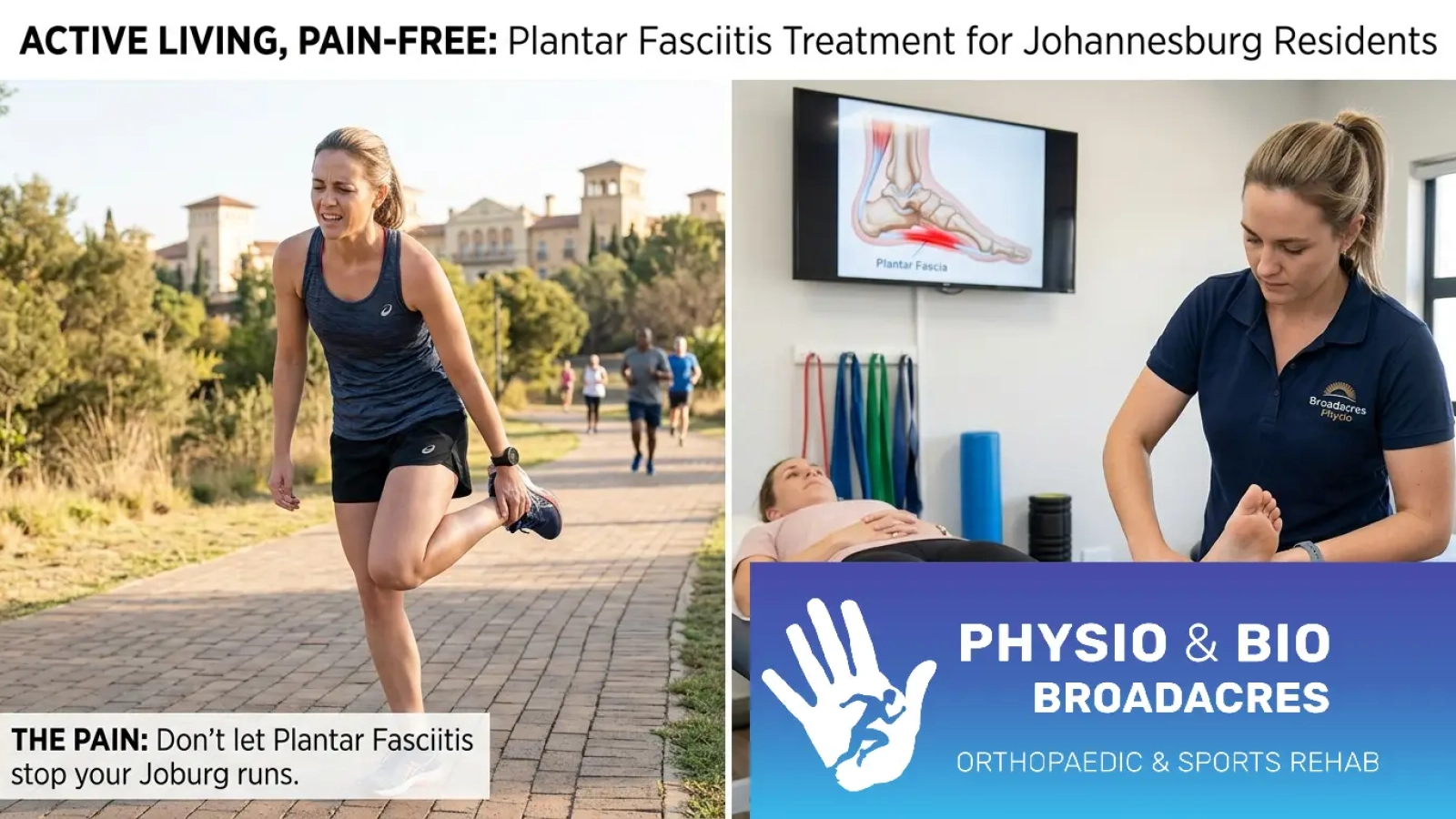
That sharp, stabbing pain in your heel when you first get out of bed in the morning — or the burning ache that hits after a few kilometres on your regular Fourways running route. If this sounds familiar, you’re likely dealing with plantar fasciitis.
As one of the most common foot complaints among active people in Gauteng, plantar fasciitis can be incredibly frustrating. It stops you from enjoying morning runs around the Montecasino area, weekend hikes in the Magaliesberg, or even simple walks with the family at Broadacres.
At Broadacres Physio in Fourways, we treat many active Johannesburg residents who are desperate to get back on their feet without pain. The good news is that with the right physiotherapy approach, most people recover well and return to the active lifestyle they love.
What Is Plantar Fasciitis?
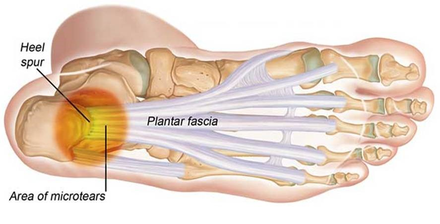
Plantar fasciitis is inflammation or degeneration of the plantar fascia — the thick band of tissue that runs along the bottom of your foot, connecting your heel bone to your toes. It acts like a shock-absorbing spring when you walk or run.
When this tissue is overloaded, small tears develop, causing pain and stiffness. While it’s often called “heel spurs,” the spur itself is rarely the main problem — it’s the irritated fascia.
Why Active Joburg Residents Get Plantar Fasciitis
Several factors common in our area increase the risk:
- High weekly running or walking mileage on hard surfaces
- Sudden increases in training intensity (especially when preparing for events like the Comrades, 947 Ride, or local park runs)
- Poor footwear — old running shoes with worn-out cushioning
- Tight calves and Achilles tendons from long hours sitting at desks followed by intense weekend activity
- Weight gain or changes in body mechanics during pregnancy or post-pregnancy
- Hard Johannesburg surfaces — tar roads, gym floors, and concrete pavements
Office workers who sit all week and then train hard on weekends are particularly vulnerable.
How Physiotherapy Treats Plantar Fasciitis Effectively
At Broadacres Physio, we take a comprehensive, active approach rather than just recommending rest and ice. Our treatment focuses on reducing pain while addressing the root causes.
Treatment typically includes:
- Manual therapy — Releasing tight calf muscles, plantar fascia, and surrounding tissues
- Targeted strengthening — Building resilience in the foot, ankle, and hip muscles
- Taping techniques — Short-term support to offload the fascia during activity
- Biomechanical assessment — Checking foot posture, gait, and movement patterns
- Progressive loading programme — Carefully rebuilding strength and tolerance
Practical Treatment & Self-Management Tips
Here are effective strategies you can start using today:
1. Morning Routine
- Before getting out of bed, gently massage the bottom of your foot with a frozen water bottle for 5–10 minutes.
- Do gentle calf stretches while still in bed.
2. Daily Exercises
- Calf Stretch — Lean against a wall with one leg back. Hold for 30–45 seconds, repeat 3 times per side.
- Toe Curls — Place a towel on the floor and scrunch it toward you with your toes. Do 2–3 sets of 10–15 reps.
- Short Foot Exercise — While sitting, gently draw the ball of your foot toward your heel without curling your toes. Hold for 5 seconds, repeat 10–15 times.
- Single Leg Heel Raises — Once pain allows, build strength with slow, controlled raises.
3. Footwear & Support
- Replace running shoes every 500–800km
- Consider custom or over-the-counter orthotics if you have flat feet or high arches
- Avoid walking barefoot on hard floors
4. Training Modifications
- Reduce running volume by 20–30% initially
- Mix in low-impact cross-training (swimming, cycling, elliptical)
- Avoid speed work and hills until pain-free for at least 2 weeks
When to See a Physiotherapist
Don’t wait months hoping it will go away. Book an appointment with a physiotherapist in Fourways or Broadacres physio if you have:
- Heel pain that lasts longer than 2–3 weeks
- Pain that is worse after rest and improves slightly with movement
- Difficulty walking normally in the mornings
- Pain that is affecting your training or daily activities
- Any swelling, redness, or warmth in the heel area
Early treatment usually leads to much faster recovery — often within 6–12 weeks instead of 6–12 months.
Plantar Fasciitis and the Active Johannesburg Lifestyle
Living an active life in Fourways and Johannesburg is fantastic but demanding. Early morning runs before traffic builds up, weekend trail runs, gym sessions after work, and playing sport with kids all put repeated stress on your feet.
Our Highveld climate, hard surfaces, and busy lifestyles make proper foot care and recovery even more important. At Broadacres Physio, we understand these local realities and create practical treatment plans that fit around real Joburg schedules.
Conclusion
Plantar fasciitis doesn’t have to sideline you from the activities you enjoy. With the correct combination of hands-on treatment, targeted strengthening, load management, and smart prevention strategies, you can overcome heel pain and return to running, walking, and sport stronger than before.
Nicola Walker, Jessica Krone, and Gemma Schultz at Broadacres Physio have helped many active Johannesburg residents beat plantar fasciitis and get back to the lifestyle they love.
Ready to walk and run pain-free again?
Contact our team today to book a detailed foot and gait assessment. We’ll identify the contributing factors and create a personalised recovery plan designed for your goals and lifestyle.
Visit https://www.baphysio.co.za or WhatsApp our Broadacres practice in Fourways to schedule your appointment.
Take the first step towards pain-free, active living.
FAQ
Q1: How long does plantar fasciitis usually take to heal? With proper physiotherapy, most people improve significantly within 6–12 weeks. Chronic cases can take longer.
Q2: Should I stop running completely if I have plantar fasciitis? Not always. Many people can continue with modified training. Your physiotherapist will guide you on safe levels.
Q3: Are orthotics necessary for plantar fasciitis? They can be very helpful for some people, but strengthening exercises and manual therapy are often more important long-term.
Q4: Can plantar fasciitis come back after recovery? Yes, if underlying causes (tight calves, poor footwear, training errors) aren’t addressed. Prevention is key.
Q5: Do I need a referral to see a physiotherapist at Broadacres Physio? No referral is needed. You can book directly with our experienced team.
Take Control of Your Pain Today
Don’t let pain or stiffness hold you back. Heat and cold therapy at Broadacres Physio in Broadacres, Fourways can help you manage discomfort, recover faster, and live an active life. Our expert physiotherapists are ready to guide you with personalized, science-backed care.
Ready to feel the difference? Visit www.baphysio.co.za to book your appointment today. Let Broadacres Physio help you thrive in Fourways, Johannesburg!
📍 Visit us at Broadacres Physio in Fourways
📞 Call us on 011 467 8300
📧 Email us at admin@baphysio.co.za
🌐 www.baphysio.co.za
Let’s get you moving, healing, and thriving — the way your body was designed to.
Broadacres Physio – Where Healing Starts With Understanding
At Broadacres Physio, we believe that healing starts by understanding you. By treating the underlying causes — not just the symptoms — we give you the tools, knowledge, and support to reclaim your health and stay pain-free for the long run.
Let’s keep you moving. Book your session today at www.baphysio.co.za.
Add a Comment