

The Springboks are in action again, and Johannesburg is buzzing with rugby fever. Whether you’re cheering from the stands at Ellis Park, playing club rugby on weekends, or just enjoying some touch rugby with friends, the excitement is real.
But with the tackles, scrums, and high-intensity play comes a higher risk of shoulder and neck injuries. At Broadacres Physio in Fourways, we treat many rugby players and passionate fans dealing with these issues every season.
The good news? Most shoulder and neck problems in rugby are preventable with the right preparation and care.
Why Shoulders and Neck Are Vulnerable in Rugby
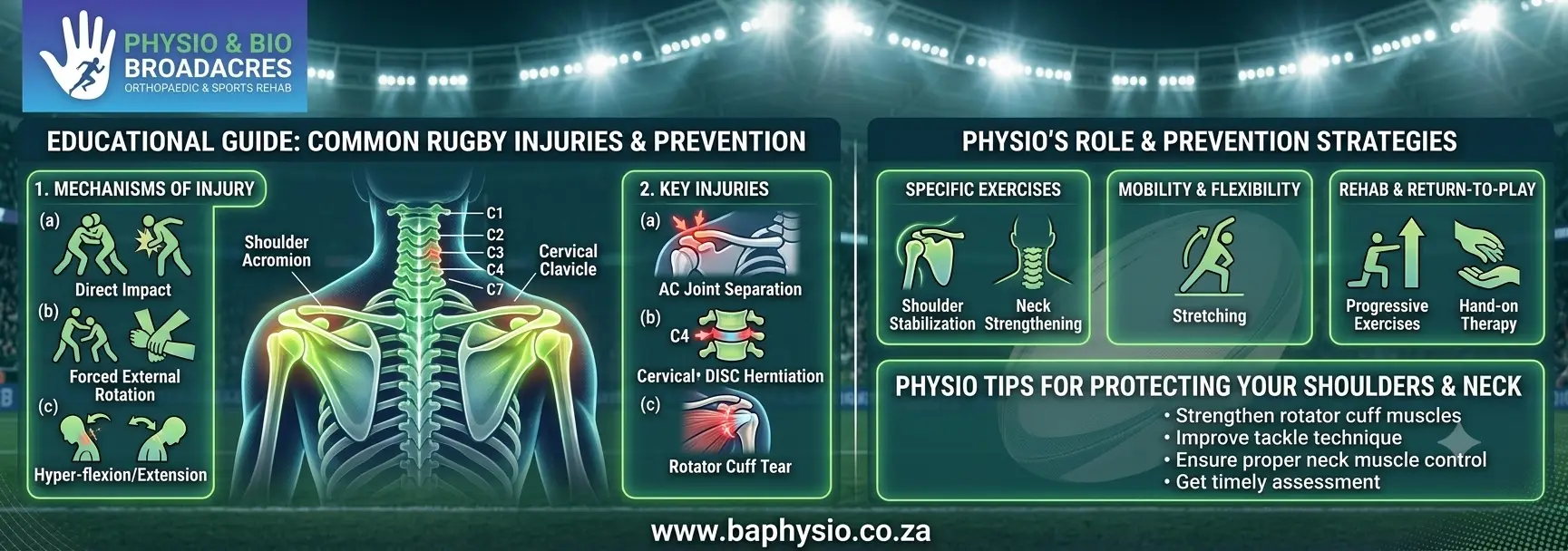
Rugby is a high-contact sport. Shoulders take the brunt of tackles, while the neck absorbs forces during rucks, mauls, and scrums. Common problems include:
- Shoulder dislocations or instability
- Rotator cuff strains
- AC joint injuries (where the collarbone meets the shoulder)
- Neck muscle strains and stiffness
- Whiplash-type injuries from tackles
Both amateur players in Gauteng clubs and weekend warriors watching (and sometimes imitating) the Springboks are at risk.
Common Causes of Shoulder and Neck Injuries
- Poor Tackling Technique — Leading with the head or using the shoulder incorrectly
- Weak Rotator Cuff and Scapular Muscles — Leaves the shoulder joint unprotected
- Neck Weakness and Poor Posture — From desk jobs combined with weekend rugby
- Insufficient Warm-Up — Cold muscles are more prone to injury
- Fatigue in Later Stages of Games — Form breaks down, increasing risk
How Physiotherapy Helps Protect Rugby Players
At Broadacres Physio, our sports physiotherapy team (Nicola Walker, Jessica Krone, and Gemma Schultz) helps players and enthusiasts stay on the field safely.
We focus on:
- Pre-season screening to identify weaknesses
- Targeted shoulder stability and rotator cuff strengthening
- Neck strengthening and mobility exercises
- Tackling and contact technique advice (in partnership with coaches)
- Injury-specific rehabilitation when needed
Practical Prevention Tips for the Season
For Players
- Strengthen Your Shoulders Include rotator cuff exercises with resistance bands and scapular stability work 2–3 times per week.
- Neck Conditioning Gentle isometric neck exercises and mobility drills help prepare for contact.
- Warm-Up Properly Dynamic shoulder circles, band pull-aparts, and neck rotations before every session.
- Technique First Work with coaches on safe tackling form — head up, shoulder contact, arms wrapped.
- Recovery Matters Prioritise sleep, nutrition, and light mobility work after matches.
For Fans Watching the Springboks
Even supporters can suffer “couch rugby” injuries from poor posture while cheering:
- Sit with good back support
- Take breaks to stand and move
- Avoid awkward neck craning during big plays
When to See a Physiotherapist
Don’t wait for a small niggle to become a season-ending injury. Book with a sports physio Johannesburg or Broadacres physio if you have:
- Shoulder pain during or after matches
- Clicking, instability, or weakness in the shoulder
- Persistent neck stiffness or headaches after games
- Pain that affects your tackling or passing
- Any numbness or tingling in the arms
Rugby Season and the Johannesburg Lifestyle
From schoolboy rugby to club matches and watching the Springboks at Ellis Park or Loftus, rugby is part of the fabric of life in Gauteng. Balancing training, work in Fourways offices, and family commitments is challenging, but proper preparation keeps you in the game.
Broadacres Physio understands the local rugby scene and provides practical support for players and fans across Johannesburg.
Conclusion
The Springboks season is a time for celebration and excitement — not for sidelining injuries. By strengthening your shoulders and neck, improving technique, and listening to your body, you can enjoy the game safely.
Nicola Walker, Jessica Krone, and Gemma Schultz at Broadacres Physio in Fourways are here to help you stay strong on and off the field this season.
Ready to protect your shoulders and neck this rugby season?
Book an assessment with our sports physio team today. We’ll screen for weaknesses, provide targeted exercises, and create a plan that fits your playing or watching style.
Visit https://www.baphysio.co.za or contact our Broadacres practice in Fourways to schedule your appointment.
Go Bokke — and stay injury-free!
FAQ
Q1: How can I strengthen my shoulders for rugby without getting bulky? Focus on stability and endurance exercises with lighter weights and higher repetitions rather than heavy lifting.
Q2: Is neck strengthening safe for rugby players? Yes, when done progressively and with proper technique. It significantly reduces injury risk.
Q3: Should I play through shoulder pain? No. Continuing with pain often leads to more serious injuries. Get it assessed early.
Q4: Can physiotherapy help after a shoulder dislocation? Absolutely. Structured rehab is essential for regaining stability and confidence.
Q5: Do I need a referral to see a physiotherapist? No referral is needed. Book directly with our team at Broadacres Physio.
Take Control of Your Pain Today
Don’t let pain or stiffness hold you back. Heat and cold therapy at Broadacres Physio in Broadacres, Fourways can help you manage discomfort, recover faster, and live an active life. Our expert physiotherapists are ready to guide you with personalized, science-backed care.
Ready to feel the difference? Visit www.baphysio.co.za to book your appointment today. Let Broadacres Physio help you thrive in Fourways, Johannesburg!
📍 Visit us at Broadacres Physio in Fourways
📞 Call us on 011 467 8300
📧 Email us at admin@baphysio.co.za
🌐 www.baphysio.co.za
Let’s get you moving, healing, and thriving — the way your body was designed to.
Broadacres Physio – Where Healing Starts With Understanding
At Broadacres Physio, we believe that healing starts by understanding you. By treating the underlying causes — not just the symptoms — we give you the tools, knowledge, and support to reclaim your health and stay pain-free for the long run.
Let’s keep you moving. Book your session today at www.baphysio.co.za.
Add a Comment